
Well Water Test Results Checker
The lab report is on the counter: iron 1.5, manganese 0.2, pH 6.4, hardness 12 grains — and a dealer's quote that treats exactly one of those numbers. This checker reads the report the way the treatment order is actually decided: each number against its guideline first, then the numbers together, because together is what picks the equipment, and the order it has to run in.
Enter your numbers below. Nothing leaves your browser. If a line is missing from your report, read that verdict as provisional — and see what each number on the report decides for the full reasoning.
Your numbers, read one by one
The order those numbers force
One cartridge system fits inside these ceilings
Your numbers sit inside the published ceilings of a cartridge system — iron at or below 3.0 ppm, manganese at or below 1.0 ppm, no sulfur stage needed, no iron bacteria: the iSpring WGB32BM, three 20-inch cartridges (sediment, carbon block, iron/manganese) at $535.99 at iSpring's store (checked November 2026). Readers of this site can take 10% off a first filtration system with the code REFISPRING when ordering through this link. Check the current price at iSpring →
Two cautions before it becomes a decision: check the system's published flow rating against your household's peak demand, and price the yearly cartridge changes — the replacement pack is a running cost, not a one-time purchase.
Benchmarks: US EPA secondary drinking water guidelines (iron 0.3 mg/L, manganese 0.05 mg/L, pH 6.5–8.5), the USGS hardness classes, the Minnesota Department of Health softener guideline (consider one above 7 gpg / 120 mg/L), and the EPA lifetime health advisory for manganese (0.3 mg/L). Full sources are listed at the end of this page.
How to use this checker
- Start from a lab report. The verdicts are only as good as the numbers: a certified lab's mg/L figures are what equipment gets sized from. Strips and home kits are for watching between lab tests — what each kind of test can and cannot do.
- Hardness in either unit. Reports come in grains per gallon or mg/L; pick the one yours uses and the checker converts (1 gpg = 17.1 mg/L).
- Sulfur is answered by location, not by nose strength. Smell in hot water only usually means the water heater. Smell in cold water too means the gas is in the groundwater — the hot-and-cold test in the sulfur guide tells the three causes apart.
- Iron bacteria is a look, not a number. Open the toilet tank: rusty orange slime or an oily rainbow sheen on the water means they are present, and that answer changes the plan more than any single number does.
How to read the verdicts
Most of these benchmarks are the EPA's secondary guidelines — non-enforceable yardsticks for the chemicals that stain, taste, smell, and corrode. They mark the level where the nuisance becomes hard to live with; they are not lines between safe and unsafe, and the EPA does not regulate private wells at all. Read each verdict as a decision input: a number either puts a stage on your treatment list, sizes it, or tells you the stage is not needed.
One line is different in kind. Manganese also carries an EPA lifetime health advisory of 0.3 mg/L, and the checker flags results above it separately from the 0.05 mg/L staining guideline — the same distinction the manganese guide works through.
Three reports, three different answers
| The report | The order it forces |
|---|---|
| Iron 1.5, manganese 0.2, pH 7.1, hardness 12 gpg, no sulfur smell, toilet tank clean | Sediment prefilter → oxidation and filtration → softener last. The numbers sit inside a cartridge system's published ceilings, so the checker shows that option. |
| Iron 4.2, manganese 0.4, pH 6.3, hardness 9 gpg, rotten-egg smell in cold water | Sediment prefilter → pH correction → a backwashing oxidation system rated above the iron number, with a published sulfur rating → softener last. No cartridge option: the iron is above its 3.0 ppm ceiling, and cartridges carry no sulfur rating. |
| Iron 0.2, manganese 0.03, pH 7.4, hardness 5 gpg, no smell, tank clean | Nothing. Every number sits inside its guideline, so no treatment stage is forced — whatever a quote says. |
FAQ
Where do the benchmark numbers come from?
The same sources the guides use: the US EPA's secondary drinking water guidelines (iron 0.3 mg/L, manganese 0.05 mg/L, pH 6.5–8.5), the US Geological Survey's hardness classes, and Minnesota's health department guideline of considering a softener above 7 grains per gallon (120 mg/L). One line is different in kind: manganese also carries an EPA lifetime health advisory of 0.3 mg/L, and the checker flags that separately. The rest are aesthetic yardsticks, not safety lines — and the EPA does not regulate private wells at all.
My report lists hardness in mg/L, not grains. Which do I enter?
Either — pick the unit your report uses and the checker converts (1 grain per gallon = 17.1 mg/L). The same applies to iron and manganese: on a lab report, ppm and mg/L are the same number.
Can this checker replace a lab test?
No. The checker reads numbers; it cannot produce them. Strip and home-kit results are ranges between two colors — good enough for watching your water drift between lab tests, not for sizing equipment a manufacturer rates in mg/L. Bacteria is not a checker question at all: whether coliform or E. coli is present is settled by a laboratory, full stop.
Why does the order matter? Can't the softener just go first?
A softener is an ion-exchange bed, and oxidized iron coats and plugs its resin — the manufacturer's own instructions for the softener we track say to install an iron filter ahead of it on iron-bearing water. Put the iron step first and it protects the softener; reverse them and the softener slowly dies doing a job it was not built for. The same logic puts pH correction ahead of oxidation, because oxidation runs poorly in acidic water.
The checker says a cartridge system fits my numbers. Is that a recommendation?
It is a ceiling check, nothing more: your iron and manganese sit at or below the highest levels the manufacturer publishes for that system, no sulfur stage is needed, and iron bacteria are ruled out. Flow still matters — check the system's published flow rating against your household's peak demand — and cartridges are a yearly running cost, not a one-time purchase. When any number sits above a ceiling, this checker will not show the cartridge option at all.
Sources
The ratings, prices and guidelines in this guide were checked against these primary sources in November 2026.
- US EPA — Secondary Drinking Water Standards (color 15 color units, iron 0.3 mg/L, manganese 0.05 mg/L, pH 6.5–8.5)
- US Geological Survey — Hardness of Water (classification: soft 0–60, hard 121–180, very hard above 180 mg/L)
- Minnesota Department of Health — Home Water Softening (ion exchange, the 7 gpg / 120 mg/L guideline, sodium guidance)
- Minnesota Department of Health — Hydrogen Sulfide and Sulfur Bacteria in Well Water
- UMass Amherst Extension — Iron and Manganese in Private Drinking Water Wells
The numbers, on one sheet
The benchmarks behind every guide here — iron, manganese, pH, hardness, coliform, nitrate — plus the treatment order and the equipment ceilings, on a free two-page PDF. Get the free cheat sheet
The IronInMyWater rule
Test first, treat second — and never choose equipment from one number alone. Iron, pH, manganese, and hardness together decide the system; the manufacturer's published ratings, checked against your test, decide the model. How we work
Read next

Water Testing
Get Your Well Water Tested First: What the Numbers Mean Before You Buy Anything
Before you buy any filter, test the water. What each number on the report — iron, pH, hardness, sulfur, bacteria — actually decides, and the treatment order it forces.
Read the guide →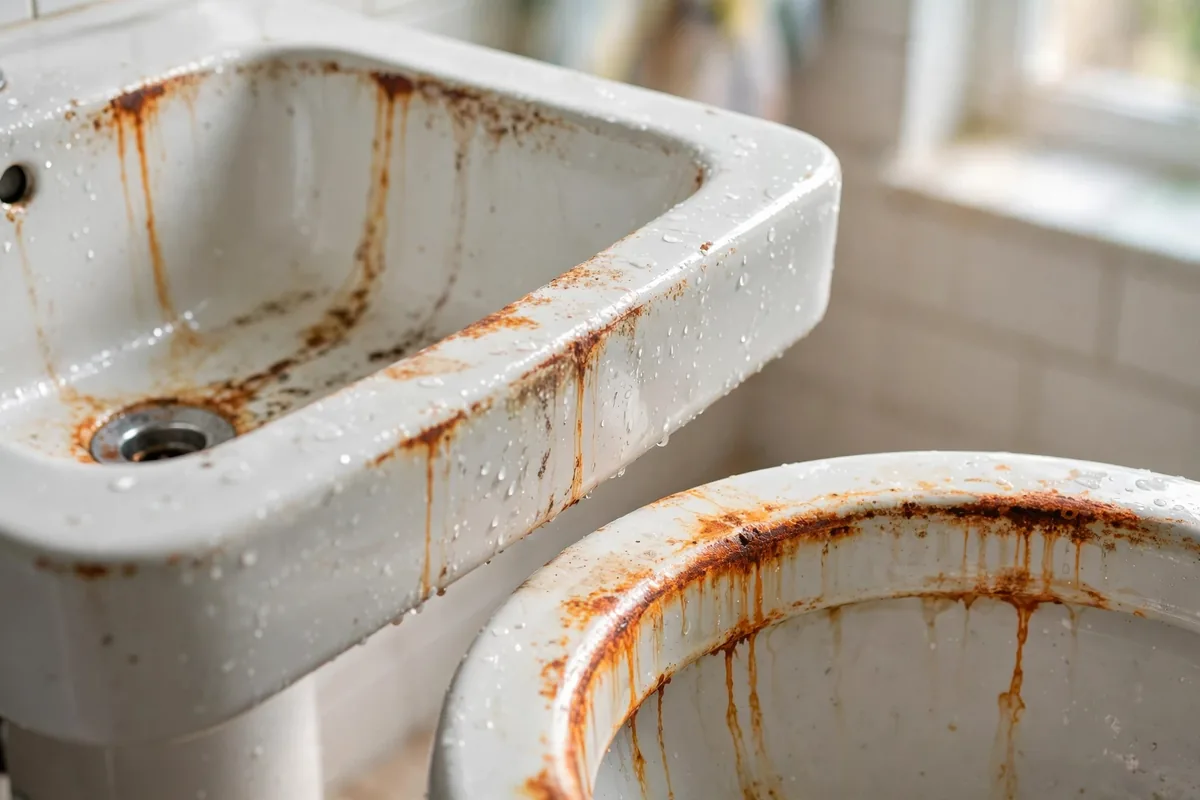
Iron & Rust Stains
Iron in Well Water: Why Everything Turns Orange (and How to Fix It)
The orange ring, the rust spots on laundry, the coin taste — the three kinds of iron behind them, the four test numbers that matter, and the treatment order that actually works.
Read the guide →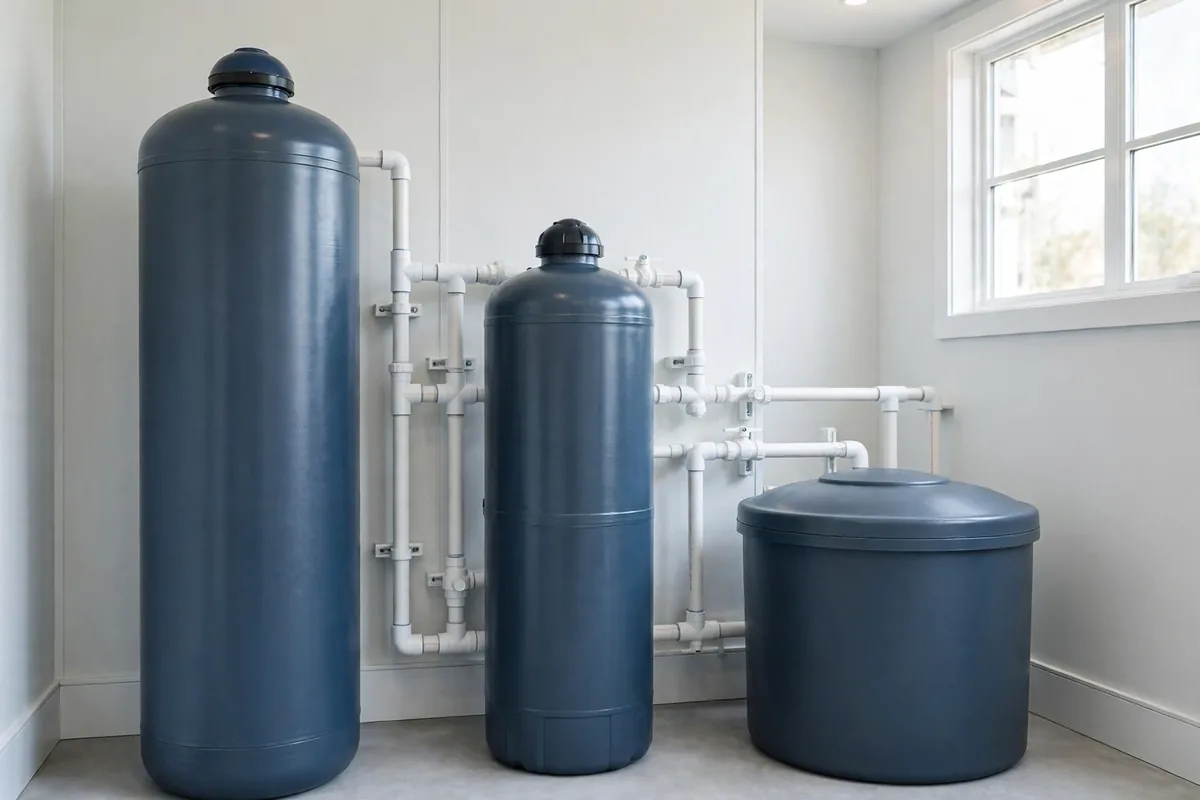
Choosing Equipment
Iron Filter vs Water Softener vs Whole-House System: Which One Do You Actually Need?
Three boxes, three different jobs — and one correct order. Why a softener will not fix iron stains, and how your test numbers pick the equipment you actually need.
Read the guide →